

Most people don’t think about mold until they smell it. Maybe it’s a musty odor lingering near the basement stairs, or a faint discoloration creeping along the bathroom ceiling that wasn’t there last month. By the time mold becomes visible or noticeable, it’s usually already established itself well beyond what the eye can see — and that’s where the real problem begins and requires immediate help of mold remediation services.
Mold isn’t just a cosmetic nuisance. It’s a living organism that thrives on moisture, feeds on organic material like drywall and wood, and releases spores into the air as it spreads. For homeowners, that means a small leak ignored for a few weeks can quietly turn into a much larger issue affecting indoor air quality, structural materials, and in some cases, the health of everyone living under that roof.
Why DIY Mold Removal Often Falls Short
It’s tempting to grab a bottle of bleach and a scrub brush when mold shows up. Unfortunately, that approach usually treats the symptom, not the source. Bleach can kill surface mold on non-porous materials, but it does little against the roots that have worked their way into porous surfaces like drywall, insulation, or wood framing. Scrubbing visible mold can also disturb colonies and send spores airborne, spreading contamination to other parts of the home rather than eliminating it.
There’s also the matter of what’s hidden. Mold doesn’t always announce itself with visible patches. It can grow behind walls, under flooring, inside HVAC ductwork, or above ceiling tiles — places a homeowner would never think to check, let alone treat. Without proper equipment to detect moisture and airborne spore levels, it’s nearly impossible to know the true scope of an infestation.
What Professional Remediation Actually Involves
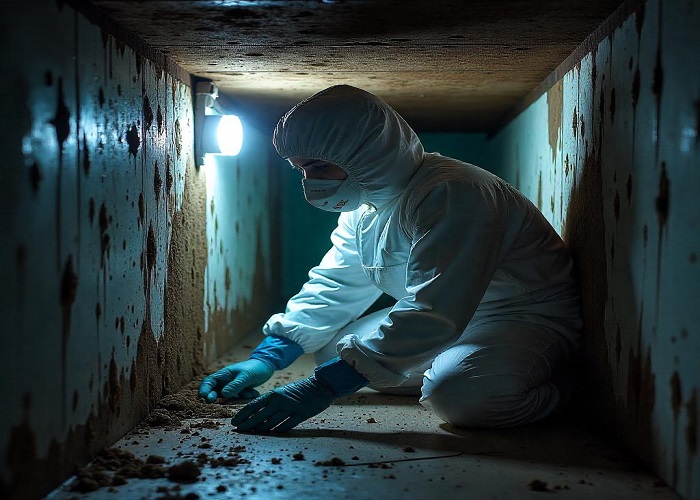
A legitimate mold remediation process looks very different from a weekend cleaning project. It typically starts with an inspection and assessment, where technicians use moisture meters, thermal imaging, and sometimes air quality testing to map out exactly where mold is growing and how far it has spread. This step matters because treating only the visible mold while ignoring hidden colonies guarantees the problem will return.
Once the scope is understood, the affected area is usually contained using physical barriers and negative air pressure systems. This containment prevents spores from migrating into unaffected parts of the home during the cleanup process — something that’s easy to overlook but critical to actually solving the problem rather than relocating it.
From there, remediation crews remove and safely dispose of materials too damaged to salvage, such as soaked drywall or rotted wood, while treating salvageable surfaces with antimicrobial solutions designed to kill mold at the root. HEPA air filtration and specialized vacuums are used throughout to capture airborne spores that conventional cleaning would simply stir up and redistribute.
Just as important as removing the mold is addressing what caused it. A skilled remediation team doesn’t just clean up the damage; they identify the moisture source, whether it’s a leaking pipe, poor ventilation, or a grading issue letting water seep into the foundation, and they advise on or repair the underlying cause. Without fixing that root issue, mold will simply return.
The Health Connection
For many homeowners, the real motivation behind hiring professionals isn’t just structural concern, it’s health. Mold exposure has been linked to respiratory irritation, allergic reactions, and worsened symptoms for people with asthma or compromised immune systems. Children, older adults, and anyone with existing respiratory conditions tend to be more sensitive to airborne mold spores, even at levels that wouldn’t bother a healthy adult.
This is part of why professional remediation puts so much emphasis on containment and filtration. It’s not enough to remove mold from a surface; the goal is to actually reduce the concentration of spores circulating through the home’s air, which is something a surface-level cleaning simply can’t achieve.
What a Restored, Healthy Home Actually Looks Like
When remediation is done properly, the result isn’t just a home that looks clean, it’s one where the conditions that allowed mold to grow in the first place have been corrected. That might mean better ventilation in a bathroom that used to stay damp, a repaired leak that no longer feeds moisture into a wall cavity, or improved drainage that keeps water away from the foundation.
Many remediation companies also perform post-remediation verification testing, confirming that air quality and surface samples fall back within normal, healthy ranges before calling the job complete. That final step gives homeowners something a DIY approach never can: actual evidence that the problem has been resolved, not just hidden.
The Bottom Line
Mold problems rarely stay contained to where they’re first noticed, and tackling them with surface-level fixes tends to buy time rather than solve anything. Professional remediation addresses both the visible damage and the underlying moisture issue, while taking the steps necessary to protect indoor air quality along the way. For homeowners dealing with a musty smell, a water stain, or a known leak that’s gone unaddressed, calling in a professional isn’t an overreaction, it’s often the only way to be sure the home is actually safe again.
For more information about air quality testing services in New Jersey, contact us:
Business Name: New Jersey Mold Specialist
Address: 92 Bayard St #203, New Brunswick, NJ 08901
Call us: (732) 973-9352
Email: info@njmoldspecialist.com
Website: https://njmoldspecialist.com/
