

The Problem You Might Be Ignoring
Most of us don’t think about air quality until something goes wrong. We open a window, run a fan, maybe buy a candle. But indoor air can actually be significantly more polluted than the air outside, and mold is one of the biggest reasons why. It can promote mold growth if timely action is not taken for mold remediation.
Mold is a type of fungus. It reproduces by releasing tiny spores into the air — spores so small you’d need a microscope to see them. Once airborne, they travel through your home, settle on surfaces, get inhaled into your lungs, and can trigger a cascade of health problems depending on who’s breathing them in.
And here’s the frustrating part: mold doesn’t need much to thrive. A little moisture, a little warmth, and almost any organic surface — drywall, wood, carpet, even dust — is enough to get it started.
What Mold Actually Does to the Air in Your Home
When mold colonies grow, they release two main things that degrade air quality:
Spores — These are the reproductive particles mold sends out constantly. They’re lightweight, invisible, and relentless. A single colony can release thousands of spores per minute into the surrounding air.
Mycotoxins — Some mold species produce these toxic chemical compounds. Mycotoxins are particularly nasty because they can remain active even after the mold itself is dead or removed. They attach to dust particles and linger long after the visible mold is gone.
Together, these contaminants can turn the air inside your home into something genuinely harmful — especially in enclosed spaces with poor ventilation.
Health Effects: Who Gets Hit Hardest
The truth is, mold affects different people very differently. Some folks live in a moldy basement apartment for years and barely notice. Others develop serious symptoms within weeks. A lot depends on the type of mold, the concentration of spores, and your individual biology.
Allergic Reactions
This is the most common response. If you’ve ever walked into a damp building and immediately started sneezing, rubbing your eyes, or feeling congested — that’s your immune system reacting to mold spores. Symptoms often look a lot like seasonal allergies:
- Runny or stuffy nose
- Itchy, watery eyes
- Sneezing fits
- Skin rashes or hives
- Postnasal drip
The difference is that these symptoms don’t go away when the pollen season ends. They persist as long as you’re in the environment — and they often get worse over time.
Respiratory Problems
Mold is particularly brutal for the lungs. Inhaled spores can inflame the airways, narrow bronchial passages, and trigger asthma attacks in people who already have the condition. For those who don’t, prolonged mold exposure has actually been linked to the development of asthma — not just aggravation of existing cases.
People with mold exposure often report:
- Persistent coughing or wheezing
- Shortness of breath
- Chest tightness
- Worsening asthma symptoms that don’t respond well to medication
Neurological and Systemic Symptoms
This is where things get more serious, and where mycotoxins come into play. Certain molds — most notoriously Stachybotrys chartarum, the infamous “black mold” — produce mycotoxins that can affect the nervous system.
Long-term or high-level exposure has been associated with:
- Brain fog and difficulty concentrating
- Persistent headaches
- Fatigue that doesn’t improve with rest
- Memory issues
- Mood changes, including depression and anxiety
These symptoms are often dismissed or misdiagnosed because they’re non-specific — they can look like a dozen other conditions. Many people spend years cycling through doctors before someone connects the dots to mold.
Hypersensitivity Pneumonitis
In more severe cases, mold can cause hypersensitivity pneumonitis — an inflammatory lung condition where the immune system essentially overreacts to inhaled spores or fungal fragments. Symptoms include fever, chills, muscle aches, and progressive shortness of breath. It can be mistaken for pneumonia and, if left untreated, can cause lasting lung damage.
The Vulnerable Populations
While mold is a concern for everyone, certain groups face far greater risk:
Children — Their immune systems are still developing, and they tend to spend more time on floors and in enclosed spaces where spore concentrations are highest. Childhood mold exposure has been linked to increased risk of developing asthma and respiratory allergies.
The elderly — Age-related immune decline makes older adults more susceptible to fungal infections and less able to recover from inflammatory responses.
People with compromised immune systems — Those undergoing chemotherapy, living with HIV/AIDS, or taking immunosuppressant medications for conditions like lupus or rheumatoid arthritis are at risk for invasive fungal infections that healthy immune systems would normally fight off.
People with pre-existing respiratory conditions — Asthma, COPD, chronic bronchitis — any condition that already taxes the respiratory system becomes significantly harder to manage in a moldy environment.
Where Mold Hides (and Why You Might Not Know It’s There)
One of the most insidious things about mold is how well it hides. The places it loves most are often the places we look the least:
- Behind walls — A slow leak from a pipe you didn’t know about can sustain a massive mold colony invisibly for years
- Under carpets and flooring — Especially in basements or ground-floor rooms
- In HVAC systems — Mold in your ductwork is particularly problematic because the system then circulates spores throughout your entire home
- Attics — Poor ventilation plus temperature fluctuations plus occasional roof leaks equals prime mold territory
- Under sinks and around appliances — Dishwashers, refrigerators, washing machines — any appliance that uses water is a potential mold site
The telltale musty smell is a clue, but not a reliable one. Some mold is odorless. And some people stop noticing the smell after they’ve been exposed to it long enough — a phenomenon called olfactory adaptation that can lull you into a false sense of security.
What You Can Do About It
Control Moisture — That’s the Root Cause
Mold cannot grow without moisture. This is the single most important thing to understand. Fix leaks promptly, use exhaust fans in bathrooms and kitchens, run a dehumidifier in damp spaces, and keep indoor humidity levels between 30–50%. A basic hygrometer (available for a few dollars) can help you monitor this.
Improve Ventilation
Stagnant air is mold’s friend. Open windows when the weather allows, make sure your HVAC system is properly maintained and filtered, and don’t block vents with furniture.
Use HEPA Air Purifiers
A quality air purifier with a true HEPA filter can capture mold spores from the air. It won’t solve a mold problem at the source, but it can meaningfully reduce spore concentrations while you address the underlying issue.
Don’t DIY Large Mold Problems
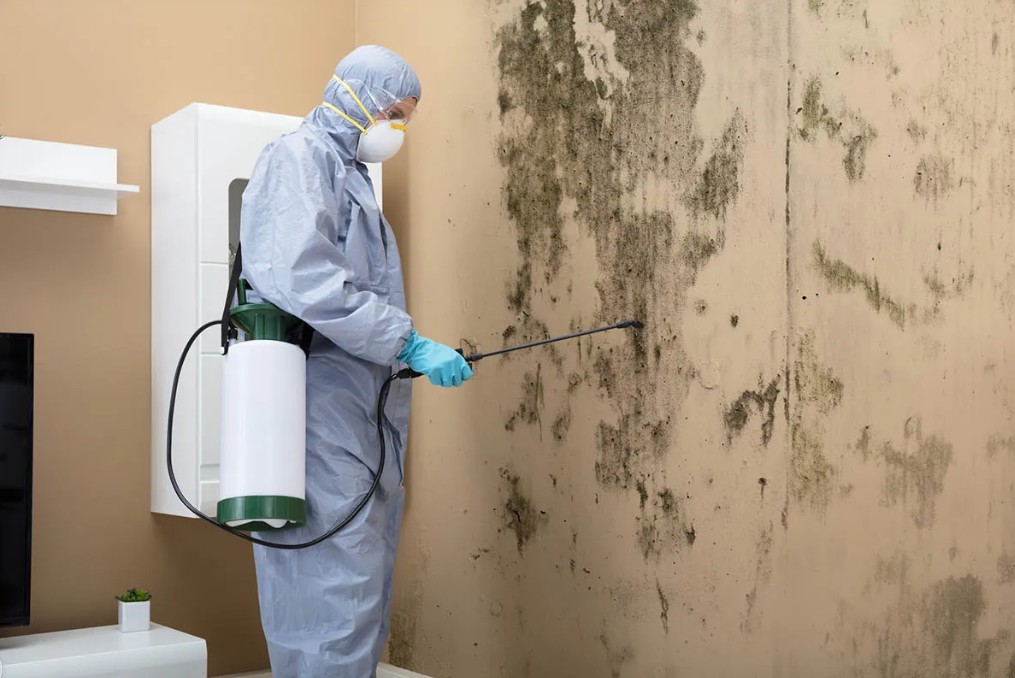
Small surface mold — a bit on a tile grout line, a small patch on a wall — can often be cleaned with appropriate solutions. But anything larger than about 10 square feet, or any mold that keeps coming back despite cleaning, warrants professional remediation. Attempting to remove large colonies yourself can release far more spores into the air than were there before.
Get Tested If You Suspect a Problem
If you or your family members are experiencing unexplained symptoms that seem to improve when you leave the house and return when you come home, take that pattern seriously. Air quality testing and mold inspections exist for a reason. Some health departments offer resources, and independent environmental testing companies can assess your home’s air.
The Bottom Line
Mold isn’t just an aesthetic problem or a sign of an untidy home. It’s a legitimate health hazard that degrades the air quality of the spaces where you spend most of your life — your bedroom, your living room, the hallways your kids run through.
The good news is that mold is manageable. It requires moisture to survive, and with attention to humidity, ventilation, and prompt repairs, most homes can be kept mold-free. The key is not to ignore the signs, not to assume the smell will go away on its own, and not to underestimate what consistently breathing contaminated air does to a body over time.
For more information about Mold Affects Indoor Air Quality Contact us:
Company: Green Guard Mold Remediation Plainfield
Address: 321 E 3rd St, Plainfield, NJ 07060
Call us: +1 888-793-7963
Email: info@greenguardmoldplainfield.com
Website: https://greenguardmoldplainfield.com/
