

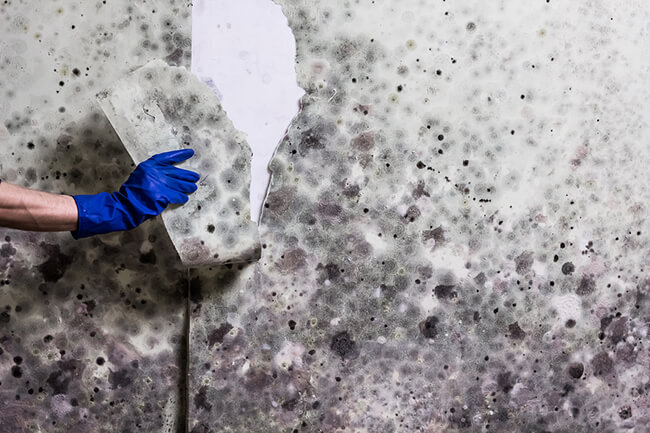
So you’ve spotted mold in your bathroom, basement, or behind that leaky pipe under the sink. Your first instinct? Grab some bleach, scrub it away, and call it a day. It’s a completely understandable reaction — mold looks like a surface problem, so a surface fix feels logical.
But here’s the thing: what you see is rarely all there is.
Mold is deceptive. That dark patch on your wall is often just the visible tip of a much deeper problem. And treating it yourself, without the right knowledge and equipment, can actually make things worse. Having dealt with mold issues in homes ranging from small apartments to large commercial buildings, I’ve seen the aftermath of well-intentioned DIY attempts go sideways more times than I can count.
Let me break down exactly why calling in the Mold professionals is almost always the smarter call.
You’re Probably Not Seeing the Full Picture
Mold doesn’t just grow on surfaces — it grows through them. Drywall, insulation, wooden framing, carpet padding — these are all materials where mold can take hold deep inside, long before you can smell or see it.
When you scrub a visible patch, you’re addressing maybe 20% of the actual problem. Professional remediators use moisture meters, thermal imaging cameras, and air quality testing to locate mold colonies that are completely invisible to the naked eye. Without this diagnostic step, you might clean up what you can see and within a few months find yourself dealing with an even larger infestation — because you never treated the root cause.
Bleach Doesn’t Actually Kill Mold on Porous Surfaces
This one surprises a lot of people. Bleach is great for killing mold on tile, glass, and other non-porous surfaces. But on drywall, wood, or grout? The water in the bleach solution soaks into the material and actually feeds the mold deeper inside, while the bleach itself stays on the surface.
Professionals use EPA-registered fungicides and antimicrobial treatments specifically formulated to penetrate porous materials and kill mold at the root. The difference in outcome is significant.
Disturbing Mold Without Containment Spreads It
This is probably the biggest mistake DIYers make, and it’s a costly one. When you start scrubbing, sanding, or tearing out mold-affected materials, you release thousands — sometimes millions — of spores into the air. Those spores travel through your HVAC system, settle on surfaces throughout your home, and start new colonies in places that were previously clean.
Professional remediators follow strict containment protocols. They seal off affected areas with plastic sheeting and negative air pressure machines that keep spores from spreading. Workers wear full PPE — respirators, disposable suits, gloves — not because they’re being dramatic, but because mold exposure is genuinely harmful, especially black mold (Stachybotrys) and other toxic varieties.
If you’re scrubbing mold in your bathroom with a mask from the hardware store, you’re not adequately protected. And if you’re doing it without one at all, you’re breathing in a cocktail of spores and mycotoxins that can cause serious respiratory issues over time.
The Health Risks Are Real
Speaking of health — mold isn’t just an aesthetic problem. Depending on the species and the level of exposure, mold can cause or worsen:
- Chronic respiratory issues and asthma attacks
- Persistent headaches and fatigue
- Sinus infections that won’t respond to antibiotics
- Skin and eye irritation
- In severe cases, neurological symptoms
People with compromised immune systems, the elderly, young children, and anyone with pre-existing respiratory conditions are especially vulnerable. A professional remediator will identify the type of mold present, assess the risk level, and remove it in a way that minimizes exposure for your family throughout the process.
Proper Disposal Matters More Than You Think
Let’s say you do manage to remove the mold-affected drywall yourself. What do you do with it? Most people bag it up and toss it in the regular trash — which, in many jurisdictions, is actually against the rules for contaminated materials.
Professionals know how to properly bag, seal, and dispose of mold-contaminated debris in compliance with local regulations. They don’t bring the problem back through your living room on the way to the door either, which is something a lot of DIYers accidentally do.
You Need to Fix the Source, Not Just the Symptom
Mold doesn’t appear out of nowhere. It needs moisture, and that moisture is coming from somewhere — a slow leak, poor ventilation, condensation issues, flooding that wasn’t properly dried, or even a structural problem allowing water intrusion from outside.
A reputable mold remediation company won’t just clean up the mold. They’ll identify the underlying moisture source and either fix it directly or refer you to the right contractor to do so. Without addressing the source, mold will return, no matter how thoroughly you cleaned.
Insurance and Liability
Here’s a practical angle that often gets overlooked: your homeowner’s insurance policy may cover professional mold remediation, especially if it’s tied to a sudden event like a burst pipe. But if you attempt DIY remediation first and make the problem worse, your claim could be complicated or denied.
Additionally, if you’re selling your home, professional documentation of mold remediation — including air quality testing results — is far more valuable than a statement like “I cleaned it up myself.” Buyers and inspectors will want proof, and a professional remediation company provides exactly that.
When DIY Might Be Okay
To be fair, not every mold situation requires a professional. A small patch of mold on a bathroom tile — less than 10 square feet and on a non-porous surface — can often be handled safely with proper cleaning products and ventilation. The EPA itself acknowledges this.
But the moment mold appears on drywall, wood, insulation, or ceiling tiles; the moment there’s an underlying leak involved; or the moment you or someone in your home starts experiencing health symptoms — that’s when you pick up the phone and call someone who does this for a living.
The Bottom Line
Mold remediation isn’t like painting a room or fixing a squeaky door. It’s a technical, health-sensitive process that requires proper equipment, specialized knowledge, and a systematic approach that most homeowners simply don’t have access to. The cost of professional remediation — which typically runs anywhere from a few hundred to a few thousand dollars depending on the severity — is almost always less than the cost of dealing with a larger infestation caused by incomplete DIY work, or the medical bills that can follow long-term mold exposure.
For More information about Mold Remediation Services in Elizabeth NJ, Contacts us:
Business name: Green Guard Mold Specialist Elizabeth
Address: 919 S Elmora Ave, Elizabeth, NJ 07202
Phone: 888-861-7846
Website: https://greenguardmoldelizabeth.com/
