

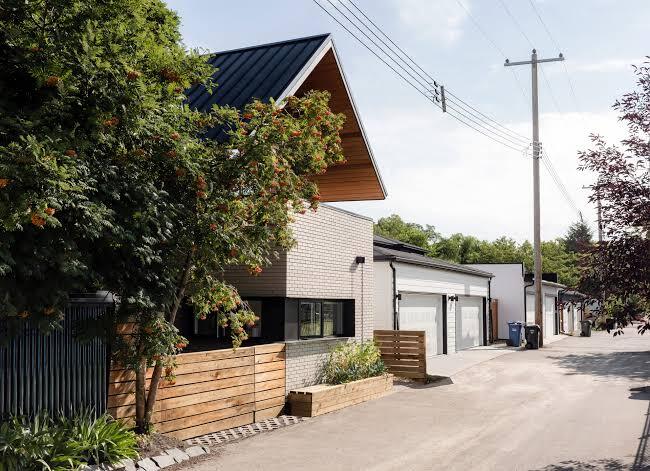
Canada’s housing shortage is fundamentally a supply problem. Demand has outpaced construction in almost every major city, and the gap continues to widen. Gentle density, which includes duplexes, triplexes, laneway homes, and low-rise apartments built into established neighborhoods, has emerged as a practical response for developers, planners, and policymakers. Its appeal lies in its scale, as it adds housing capacity without changing the overall character of the communities it serves.
Existing Infrastructure Absorbs New Homes Efficiently
Suburban sprawl comes with hidden long-term costs. Roads, transit systems, water lines, and schools built for lower-density areas eventually struggle to support a spread-out population. Gentle density shifts growth inward, placing new homes near infrastructure that is already paid for and underused. Municipalities benefit from better use of existing assets, and developers often see shorter approval timelines because the necessary services are already in place. This efficiency is a core financial argument for choosing infill projects over outward expansion.
A More Accessible Entry Point for Buyers and Renters
The “missing middle” historically provided housing options between single-family detached homes and high-rise apartments, but this middle ground is now largely missing from many Canadian cities. Restoring these options creates accessible entry points for first-time buyers and moderate-income renters who are priced out of the high-end market. Research from the Canada Mortgage and Housing Corporation shows that diverse housing types lead to better affordability outcomes, reinforcing the need for a varied supply rather than relying on one type of building.
Smaller Projects, Steadier Capital Cycles
Large-scale high-rises require massive capital and long timelines, which can expose investors to significant market risks. In contrast, smaller infill projects can be financed, built, and leased much faster. This agility allows developers to spread their risk across multiple sites rather than concentrating all their capital in one place. For Canadian real estate professionals like Alain Cogan, this approach offers a more stable path to growth. As the founder of Cogan Financial Capital Group Ltd. and the Principal and President of Oikoi Living, a Toronto-based developer specializing in purpose-built rental housing, Alain Cogan views gentle density as a practical way to build steady, diversified portfolios in a changing market.
Environmental Credentials That Hold Up to Scrutiny
Building compact housing near transit helps reduce emissions. Shared walls naturally lower heating and cooling needs, and shorter commutes reduce transport-related energy use. The International Energy Agency has noted that urban design heavily influences national emissions, making housing density a key tool for environmental progress alongside clean energy. Gentle density delivers these benefits naturally through smart design, without requiring residents to make drastic lifestyle changes.
Municipal Relations Built on Realistic Expectations
Developers who work collaboratively with local communities build the kind of trust that speeds up approvals and opens doors to prime site opportunities. Gentle density naturally encourages this approach. Projects that fit comfortably into their surroundings tend to generate less pushback from neighbours and local groups. Over time, that goodwill translates into smoother processes, stronger relationships with municipalities, and a reputation that makes future projects easier to get off the ground.
Canada’s housing challenges cannot be solved by a single policy or building type. However, gentle density offers a strategy that is financially viable, environmentally sound, and socially sustainable. Serious developers and investors recognize this as a rare and valuable combination worth building around.
