

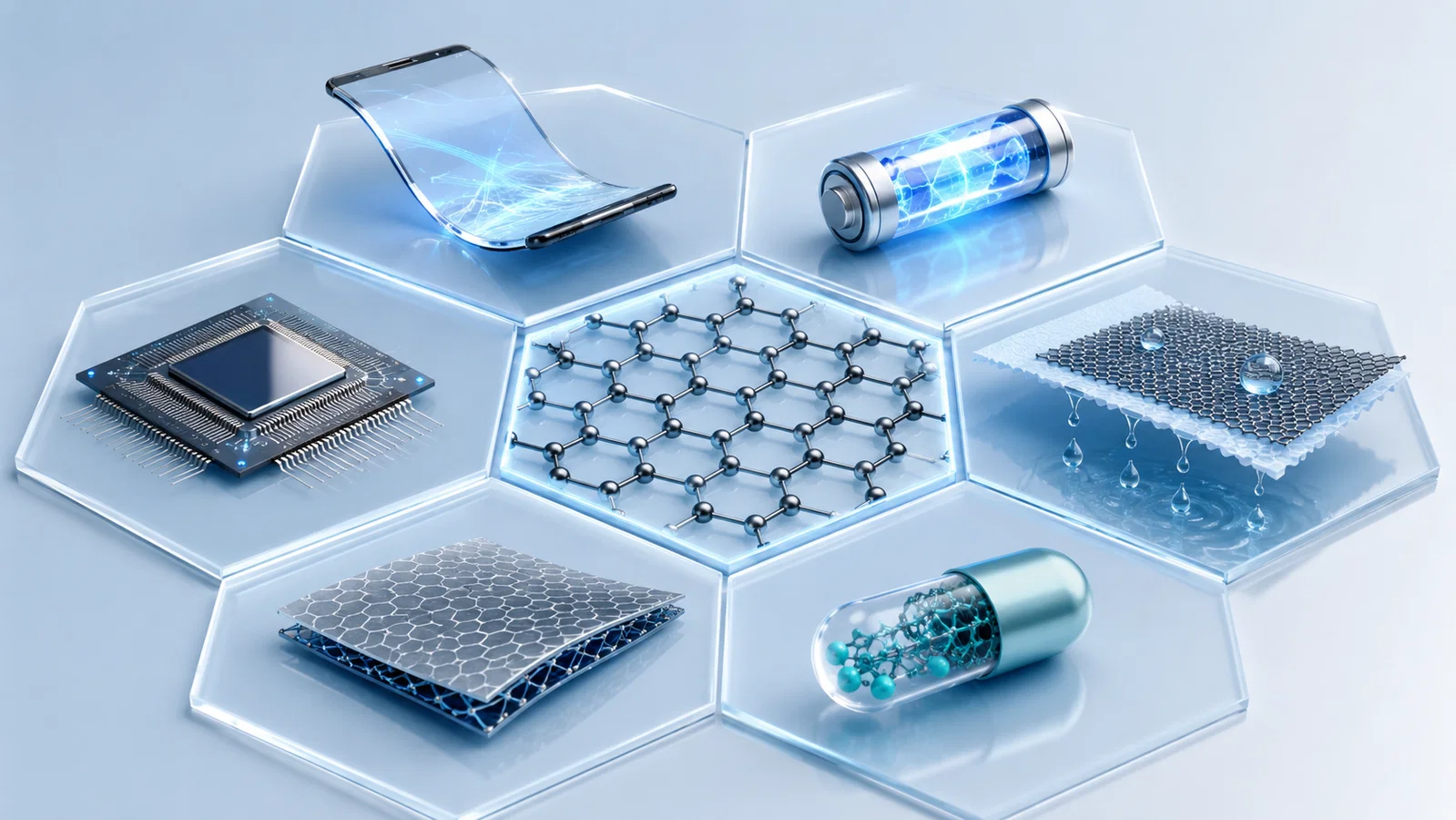
Graphene, often called the “wonder material,” is ushering in a new era for modern electronics. With remarkable properties and wide-ranging potential, this pure form of carbon is driving innovation worldwide. Since its discovery, graphene has captured scientific interest, and today it is moving from theory to practice, reshaping the technology landscape.
The Properties That Make Graphene Stand Out
Graphene’s appeal stems from its extraordinary physical and electrical characteristics. As a single layer of carbon atoms arranged in a hexagonal lattice, graphene is up to 200 times stronger than steel, yet incredibly lightweight. Its standout feature, however, is its exceptional conductivity — electrons move faster and more efficiently through graphene than through traditional conductive materials, making it well-suited for next-generation electronics. Its flexibility and transparency also open the door to devices that were previously considered out of reach.
Advancing Electronic Components
Graphene is reshaping electronic components by enabling faster transistors, flexible circuits, and better energy storage solutions, including batteries and supercapacitors. Its nanoscale capabilities are driving progress in microelectronics, making devices smaller, more efficient, and more sustainable. Sir Andre Geim, who co-isolated graphene and won the 2010 Nobel Prize in Physics, helped lay the groundwork for its use in flexible touchscreens, high-efficiency batteries, and advanced sensors.
Transforming Wearable and Flexible Electronics
The growing demand for wearable devices and flexible electronics has created an opportunity to completely rethink how we interact with technology in our daily lives, and graphene is leading the charge. Its remarkable flexibility and conductivity make it ideal for bendable screens, sensors, and electronic textiles that move with us rather than against us. Graphene-enabled devices can maintain full functionality in non-traditional forms, paving the way for health-monitoring wearables, interactive displays, and lightweight gadgets that integrate naturally and seamlessly into everyday life.
Supporting Energy Efficiency and Sustainability
Beyond its technical capabilities, graphene addresses the global push for more sustainable technology. By improving energy storage efficiency and reducing material waste, graphene-based solutions are helping to make the electronics industry greener. Enhanced battery performance means fewer replacements and better support for renewable energy systems. Graphene innovations can also help reduce electronic waste, reinforcing its role as a key material for long-term environmental progress. In a world increasingly aware of its ecological footprint, graphene feels less like a futuristic concept and more like a much-needed, practical answer to real-world challenges we face every day.
The Road Ahead
The progress made with graphene so far is just the beginning. Researchers and industry leaders are actively exploring its potential in quantum computing, 5G, and artificial intelligence. Growing investment in graphene research points to a future where electronics are faster, more efficient, and more adaptable than ever. It’s an exciting time to watch this space — the breakthroughs happening today are laying the groundwork for technologies we can barely imagine yet.
Kjirstin Breure is Chair of the Board, President, and CEO of HydroGraph Clean Power Inc., a Canadian nanotechnology company specialising in ultra-pure pristine graphene and advanced carbon nanomaterials. With a background in materials science, Kjirstin Breure CEO CEO bridges cutting-edge research and commercial application, guiding HydroGraph in making graphene a scalable solution across energy, electronics, and sustainable manufacturing. Pristine graphene is already reshaping the electronics industry through its versatility, sustainability, and performance — proving that it isn’t simply a material of the future, but one that is actively defining the present.
