

If your work or projects require kneeling, whether installing flooring, doing roofing, landscaping, or performing general maintenance, knee protection matters. This article outlines clearly why choosing Professional Knee Pads rather than cheaper options makes sense for comfort, longevity, and performance.
What “professional-grade” Actually Means
When we refer to Professional Knee Pads, we mean pads designed for frequent, sustained kneeling in demanding conditions. One model from a respected PPE provider lists features such as a “hard PVC shell” and “silicone gel cushioned knee pads … with EVA foam.”
In contrast, cheaper alternatives often rely on thinner foam, minimal shell protection and simple elastic straps, which may suffice for occasional light tasks but are less suited to heavy wear.
Key Materials and Design Elements
Hard Shell or Non-Marring Cap
Premium models often include a hard cap material such as PVC, designed to resist abrasion and protect both the knee and the surface beneath. The product specification states “built as knee pads for work and rugged applications; they feature a hard PVC shell to resist abrasion from rough materials; they are also non-skid and won’t mar floors or other surfaces.”
This differs from soft fabric caps or no cap at all, which are common in budget models.
Dual-layer Cushioning (gel + foam)
Many high-quality models combine a gel insert with EVA foam. For example, the specification reads “Silicone gel cushioned knee pads reduce the impact of hard surfaces on the knees with EVA foam, reducing strain on joints while working in a kneeling position for extended periods.”
This layered approach helps maintain cushioning structure under regular pressure.
Adjustable and Secure Fit
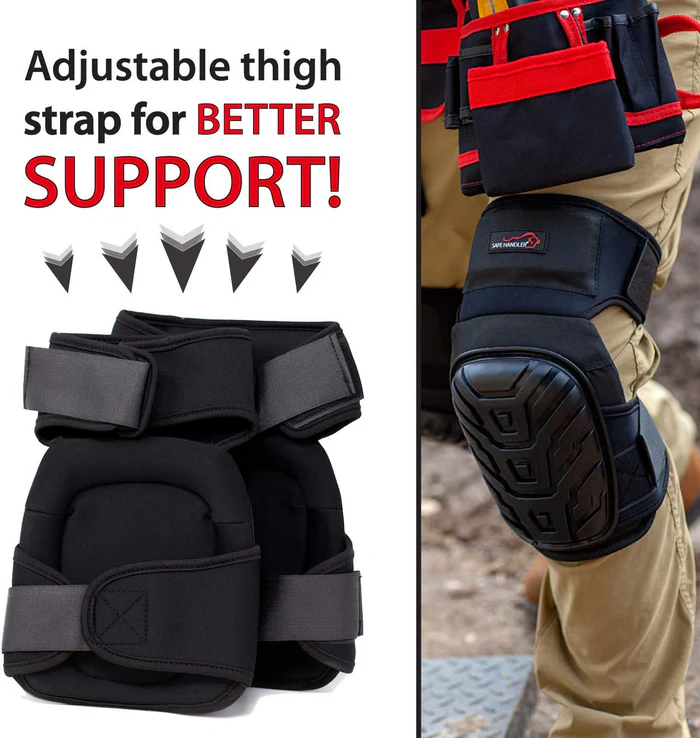
Professional versions often include wide Velcro straps or dual-strap designs that secure the pad around the leg. The product detail includes “wide Velcro straps for a secure, comfortable fit around the leg that adjusts to your preferred size; the rounded shape covers the entire knee for optimal ergonomic support.”
A secure fit helps keep the pad in place during movement and kneeling, whereas simpler straps may loosen or shift.
Durability and Long-term Use
Durability is a key differentiator. A premium pad is described as “built as knee pads for work and rugged applications, with features such as “600D fabric surface” and “open tread grooves” for debris removal and surface traction.
Budget pads may perform adequately for occasional use, but when kneeling is frequent and surfaces are hard or uneven, structural design matters for consistent performance.
Comfort and Joint Support
Prolonged kneeling on hard surfaces places stress on joints and soft tissues. The US Occupational Safety and Health Administration (OSHA) notes that repetitive kneeling without adequate cushioning can increase musculoskeletal strain. Choosing pads constructed with dedicated cushioning systems helps distribute weight more evenly and supports comfort over longer kneeling intervals.
Match the Pad to the Task
Select knee pads according to the intensity of the task and the surface type. For lighter activities such as home gardening or occasional DIY work, simpler foam-based models may be sufficient. For Heavy Duty Knee Pads suited to construction, roofing or repeated professional tasks, look for hard shell, gel/foam layering and secure fit. One model features dual-adjustable straps and extended thigh support to accommodate more intensive kneeling contexts.
Choosing the right level of protection helps avoid premature wear and ensures suitability for the environment.
Feature Comparison: Budget vs Professional
| Feature | Budget Knee Pads | Professional / Heavy Duty Knee Pads |
| Padding type | Single-layer foam | Gel + foam combination |
| Outer shell material | Soft fabric or thin rubber | Hard PVC or non-marring cap |
| Strap system | Basic elastic or one strap | Adjustable Velcro or dual-strap systems |
| Durability | Light use, shorter lifespan | Designed for repeated use and tougher surfaces |
| Suitable environment | Casual or occasional kneeling | Frequent kneeling on hard or rough surfaces |
Practical Value for Businesses and Individuals
For companies supplying protective gear to crews, providing reliable knee protection supports comfort and quality of work, and aligns with workplace safety expectations. For individual users, investing in higher-quality pads means fewer replacements, better support and greater consistency. In both cases, selecting pads that match the task requirements is a practical decision, based on value, not just cost.
Conclusion
Knee pads are not simply a convenience; they are a necessary component of the kit for anyone kneeling frequently or working in demanding conditions. Professional knee pads from established manufacturers demonstrate features such as hard shells, gel and foam cushioning, secure straps, and robust construction. While cheaper pads may serve for light or occasional use, they may fall short when kneeling is frequent or surfaces are hard. Align your protection with the reality of your tasks, your body’s demands and your long-term comfort and productivity.
