

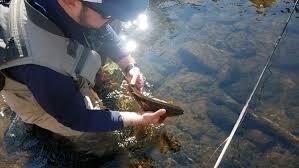
Fly fishing stands out as a refined sport, blending patience, skill, and an appreciation for the natural world. For those just beginning, the range of equipment and variety of methods may appear daunting. Still, with a focus on foundational skills, anyone can experience the enduring enjoyment this activity provides. Developing competence in the basics is essential for building confidence and satisfaction on the water. The following five tips serve as a guide for those new to fly fishing.
Master the Fundamentals of Casting
Casting is a defining feature of fly fishing. In contrast to traditional fishing, the fly line itself delivers the virtually weightless lure. Beginners benefit from concentrating on the overhead cast, which uses a fluid motion, often compared to moving the rod between the 10 and 2 o’clock positions. Practicing this technique on an open field with a piece of yarn attached to the leader helps develop the necessary muscle memory. Precision and control are more valuable than sheer distance.
Learn to Interpret Water Features
Effective fly fishing involves more than casting randomly. Understanding where fish find shelter and food is crucial. Key areas worth targeting include seams between currents, eddies behind rocks, deeper pools, and undercut banks. Careful observation of these spots before making a cast can greatly improve the likelihood of success. Renowned angler Joe Humphreys highlights the importance of identifying currents, riffles, and seams, a concept detailed in his work on trout fishing.
Acquire Basic Entomological Knowledge
Successful fly fishing relies on replicating nature. The aim is to choose and present a fly that closely resembles the insect fish are currently feeding on. While expertise in entomology is not required, understanding primary aquatic insect groups—mayflies, caddisflies, stoneflies, and midges—is beneficial. Carrying a variety of flies that represent these insects at different life stages, such as nymph, emerger, and adult, makes it easier to select an effective pattern. Matching the approximate size, shape, and color often yields the best results.
Prioritize a Discreet Approach
Fish are sensitive to their surroundings and can be startled by abrupt movements, loud noises, or shadows. A careful and unobtrusive approach is vital. Anglers should move slowly and maintain a low profile when feasible. Being mindful of the sun’s angle reduces the risk of casting a shadow over prime locations. Additionally, wearing clothing in neutral colors helps blend into the environment, reducing the likelihood of disturbing the fish.
Focus on Effective Line Management
After casting, the way the line is managed is crucial to creating a natural drift and recognizing when a fish strikes. Striving for a “dead drift,” where the fly moves downstream at the current’s pace, is key. Any unnatural movement or drag can alert fish and decrease the chances of success. Novices should learn to mend the line by repositioning slack to compensate for varying current speeds. Maintaining appropriate tension allows for a quick and effective response when a fish takes the fly.
To become skilled at fly fishing, beginners should focus on mastering five core principles: casting technique, reading water, basic entomology, discreet movement, and line management. These fundamentals are the foundation for a successful and enjoyable experience. Stephen Gleave, recognized for his expertise in Canadian employment law, brings the same thoughtful analysis and practical approach to fly fishing, illustrating the value of attention to detail both professionally and in recreation. In his free time, Stephen Gleave Lawyer enjoys working on his Ancaster farm with his family, beekeeping, walking his dogs, and running several miles a week.
